📰 Newspapers

Thailand orders clean water for thousands facing arsenic pollution

Thailand orders clean water for thousands facing arsenic pollution

It was linked to mining operations in neighbouring Myanmar.

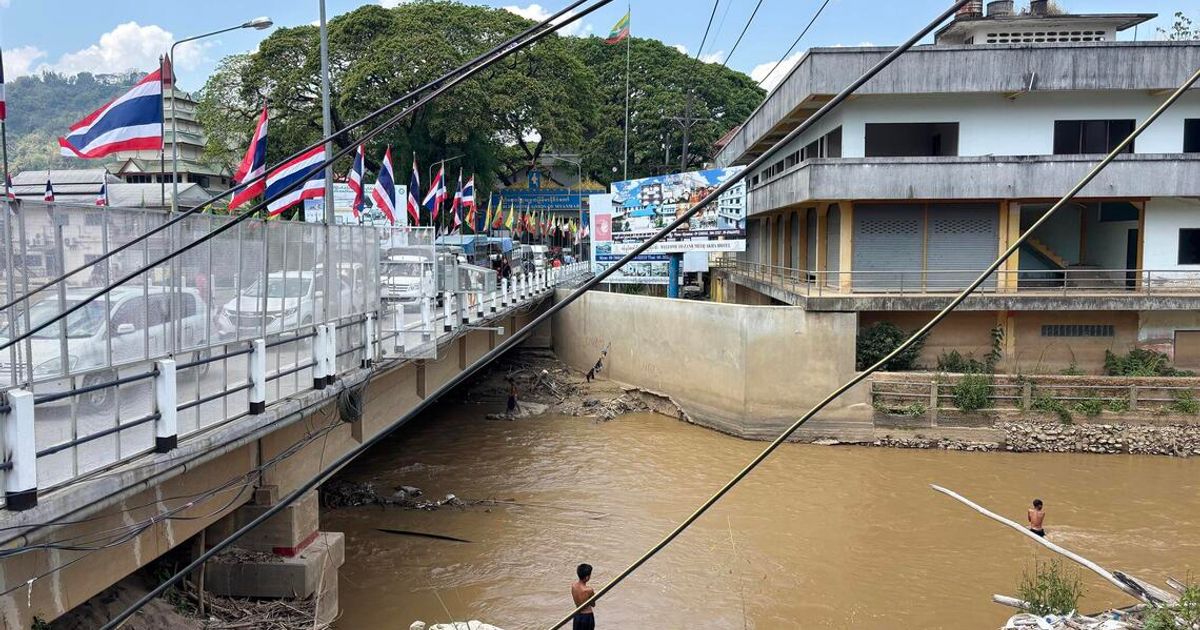
BANGKOK - Thai authorities scrambled on Nov 18 to provide clean water for more than 20,000 households in the country’s north affected by arsenic pollution linked to mining operations in neighbouring Myanmar.

Prime Minister Anutin Charnvirakul late on Nov 17 ordered government agencies to find alternative water sources and closely monitor tap water quality in Chiang Rai province, said deputy government spokeswoman Lalida Persvivatana.

Tap water supplies to 14 villages in Mae Sai district near the Myanmar border were suspended in November after officials found arsenic levels in the local waterworks to be 30 times higher than the safe limit.

The villages comprise more than 20,000 households, the government said.

Subsequent tests by authorities also found arsenic concentrations in untreated water from the Sai River, a tributary of the Mekong River, at 25 times the limit for drinking water.

Authorities have deployed two trucks to supply residents with clean drinking water, while the government is also considering alternative river water sources.

Researchers at Naresuan University said last week that chemical analysis and satellite modelling traced much of the arsenic-laden sediment in the Sai River to gold mining operations across the border in Myanmar.

Myanmar’s long-running civil war enables unregulated exploitation of natural resources, including rare earth elements used in smartphones, wind turbines and electric vehicles.

In brief

BANGKOK - Thai authorities scrambled on Nov 18 to provide clean water for more than 20,000 households in the country’s north affected by arsenic pollution linked to mining operations in neighbouring Myanmar. Subsequent tests by authorities also found arsenic concentrations in untreated water from the Sai River, a tributary of the Mekong River, at 25 times the limit for drinking water. Authorities have deployed two trucks to supply residents with clean drinking water, while the government is also considering alternative river water sources.

This is the opening of the story, shared with credit to The Straits Times — Asia. The rest of the report — with every detail — continues on the publisher’s website.

Continue reading at The Straits Times — Asia ↗

Cookie settings

Choose which cookies we may use. You can change this at any time from Cookie settings in the footer. Details of each cookie are in the Cookie Policy.

Strictly necessary

Needed for sign-in, security, payments and remembering these choices. Always on.

Preferences

Remember settings such as dark mode.

Analytics & performance

Help us count visits, understand which pages, devices and countries our readers use, and measure how well the site performs – anonymous and aggregated.

Advertising & marketing

Lets advertising partners show and personalise adverts, measure impressions, clicks and visits, prevent ad fraud and pay us – this is how the free site is funded.

🔔 News notifications

Get headlines from NewsHub on this device — even when the site is closed.

You can switch this off at any time. Works on Android, Windows, Mac and Linux browsers; on iPhone/iPad add the site to your Home Screen first.