

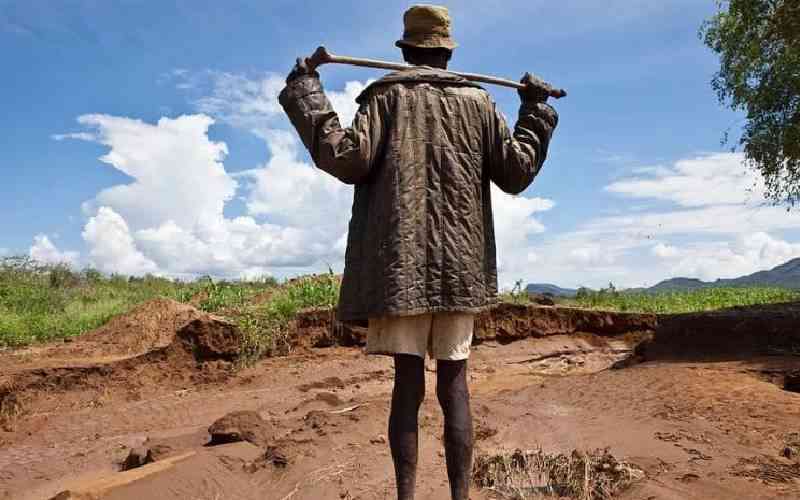
More than 600 Maasai workers are racing to dig 50,000 miniature earth dams in the Amboseli ecosystem ahead of expected El Niño rains, in an effort to restore degraded grazing land and protect pastures needed by livestock and wildlife.
The work targets hundreds of acres of bare ground where heavy rainfall risks running off hardened soil rather than soaking into it, worsening erosion and leaving little moisture to support grass growth.
Ernest Lenkoina, Rangelands Restoration Manager at Big Life Foundation, said pasture scarcity caused by land degradation was among the biggest challenges facing pastoralist communities.
“One of the biggest crises facing pastoralist communities today is pasture scarcity caused by degraded land,” he said.
The workers, recruited from villages around Mbirikani Ranch in Kajiado County, are digging semi-circular earth structures known as bunds and spreading indigenous grass seeds around them. The structures collect rainwater and slow its movement, allowing moisture to seep into the soil and support vegetation growth.
The initiative is being implemented by Big Life Foundation, with support from restoration organisation Justdiggit Foundation and the TWENDE project. Teams working at four sites are digging more than 1,000 bunds daily.
Lenkoina said preparing the ground before the rains was essential because water falling on compacted, bare soil could quickly disappear as runoff.