📰 Newspapers

‘Remarkable luck’: wreck of first Australian-built warship discovered exactly 128 years after sinking

‘Remarkable luck’: wreck of first Australian-built warship discovered exactly 128 years after sinking

HMCS Spitfire commissioned by colonial government to protect against Russian warships based at Vladivostok during Crimean war

The wreck of Australia’s first locally-built warship has been discovered 128 years after sinking off the coast of far north Queensland.

Marine archaeologists found the remains of Ex HMCS Spitfire on 21 August, the anniversary of its sinking in 1898.

The principal heritage officer at Queensland’s Department of the Environment, Tourism, Science and Innovation, Celeste Jordan, said that it was “remarkable luck”. Rediscovering lost shipwrecks would “help ensure the stories of our past are preserved, celebrated and protected for future generations”, she said.

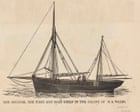
The 19-metre wooden gunboat, designed and built in Sydney in 1855, was commissioned by the Australian colonial government to protect against Russian warships based at Vladivostok during the Crimean war and concern about the French military presence in New Caledonia. It was designed to carry a 32-pounder cannon, although evidence suggests the armament may never have been fitted.

The clipper later served Queensland as a pilot vessel, before it was sold for £300 into private hands as a sea cucumber fishing vessel.

A 1981 article in the Naval Historical Review described the boat as “a sturdy little vessel”.

In brief

HMCS Spitfire commissioned by colonial government to protect against Russian warships based at Vladivostok during Crimean war The wreck of Australia’s first locally-built warship has been discovered 128 years after sinking off the coast of far north Queensland. The 19-metre wooden gunboat, designed and built in Sydney in 1855, was commissioned by the Australian colonial government to protect against Russian warships based at Vladivostok during the Crimean war and concern about the French military presence in New Caledonia.

This is the opening of the story, shared with credit to The Guardian — World. The rest of the report — with every detail — continues on the publisher’s website.

Continue reading at The Guardian — World ↗

Cookie settings

Choose which cookies we may use. You can change this at any time from Cookie settings in the footer. Details of each cookie are in the Cookie Policy.

Strictly necessary

Needed for sign-in, security, payments and remembering these choices. Always on.

Preferences

Remember settings such as dark mode.

Analytics & performance

Help us count visits, understand which pages, devices and countries our readers use, and measure how well the site performs – anonymous and aggregated.

Advertising & marketing

Lets advertising partners show and personalise adverts, measure impressions, clicks and visits, prevent ad fraud and pay us – this is how the free site is funded.

🔔 News notifications

Get headlines from NewsHub on this device — even when the site is closed.

You can switch this off at any time. Works on Android, Windows, Mac and Linux browsers; on iPhone/iPad add the site to your Home Screen first.
