📰 Newspapers

Iraq university’s removal of male professors teaching women sparks weeks of protests

Iraq university’s removal of male professors teaching women sparks weeks of protests

Al-Qadisiyah University’s move a sign of the country’s slide into a Taliban-like gender segregation, say activists

The removal of male professors teaching female students at a university in southern Iraq has sparked protests and been criticised by activists as a Taliban-like gender segregation policy.

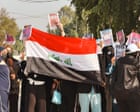
As many as 400 women are estimated to have joined protests over the past two weeks calling for the return of their professors at Al-Qadisiyah University in a move that appears to have surprised its administrators.

The university said the move was necessary to “prevent the mixing” of men and women and had been requested by the families of female students. But students said their families had known since before they enrolled that there were men on the teaching staff and supported their daughters’ protest.

Students said university bosses had mocked their protests and refused to discuss their concerns about the sudden loss of their academic supervisors. On social media, commentators also accused the women of seeking to keep male professors to “establish immoral relationships with them”.

“My classmates and I went to demonstrate, and the university president, Rahi al-Yasiri, blocked our path with his bodyguards, who then began making fun of us. He ordered them to take photographs of our faces, in an attempt to intimidate us and punish us later,”
In brief

Al-Qadisiyah University’s move a sign of the country’s slide into a Taliban-like gender segregation, say activists The removal of male professors teaching female students at a university in southern Iraq has sparked protests and been criticised by activists as a Taliban-like gender segregation policy. On social media, commentators also accused the women of seeking to keep male professors to “establish immoral relationships with them”.

This is the opening of the story, shared with credit to The Guardian — World. The rest of the report — with every detail — continues on the publisher’s website.

Continue reading at The Guardian — World ↗

Cookie settings

Choose which cookies we may use. You can change this at any time from Cookie settings in the footer. Details of each cookie are in the Cookie Policy.

Strictly necessary

Needed for sign-in, security, payments and remembering these choices. Always on.

Preferences

Remember settings such as dark mode.

Analytics & performance

Help us count visits, understand which pages, devices and countries our readers use, and measure how well the site performs – anonymous and aggregated.

Advertising & marketing

Lets advertising partners show and personalise adverts, measure impressions, clicks and visits, prevent ad fraud and pay us – this is how the free site is funded.

🔔 News notifications

Get headlines from NewsHub on this device — even when the site is closed.

You can switch this off at any time. Works on Android, Windows, Mac and Linux browsers; on iPhone/iPad add the site to your Home Screen first.