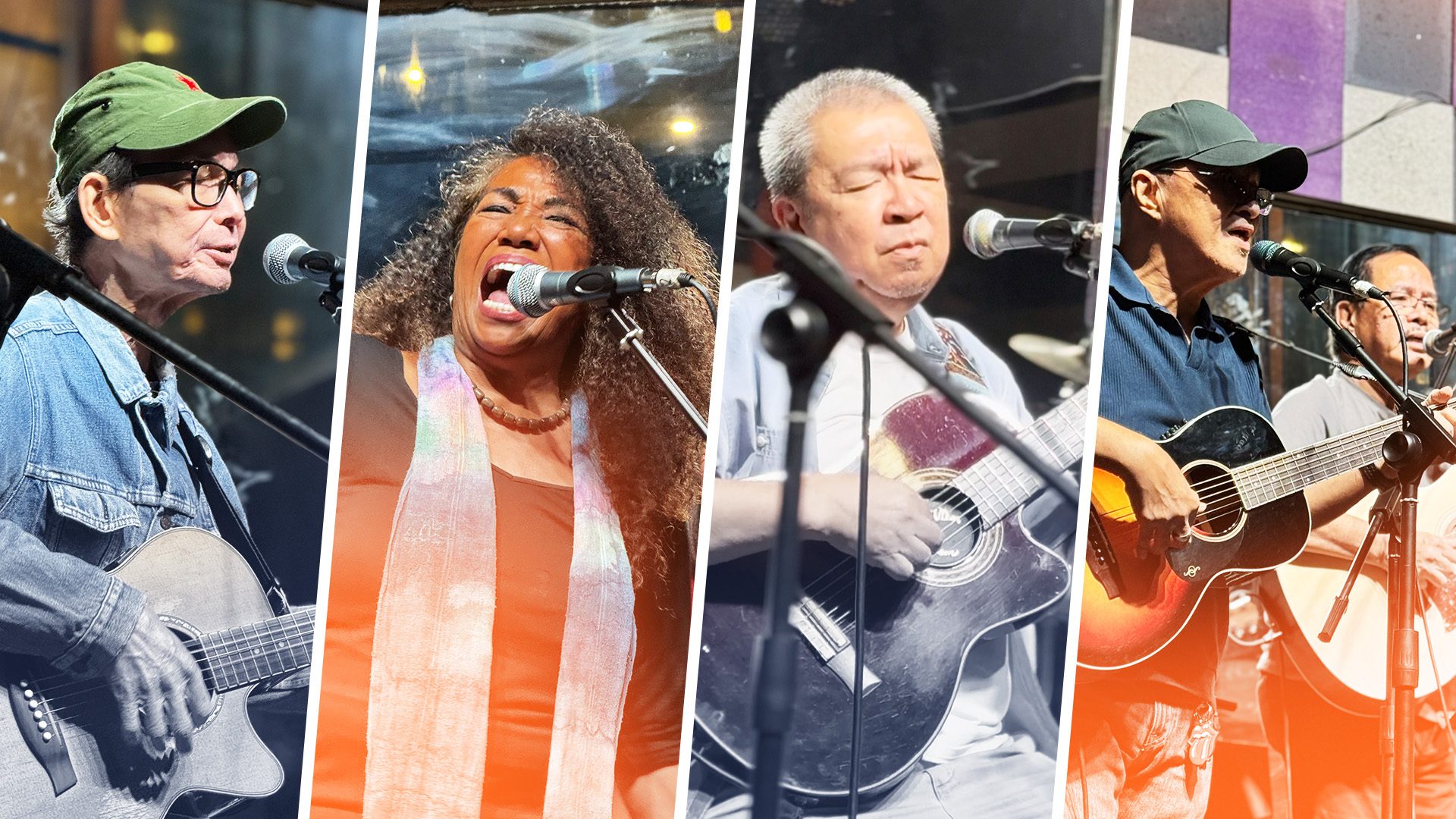
In my first week of college in Manila, I went looking for the nearest, and cheapest, folk house in the University Belt. It was 1978 and the scene was in full bloom. Once my campus paper allowance kicked in, I graduated from the folk houses of Recto and Morayta to Ermita, the mecca, the venues we read about in Jingle Magazine: Kola House, Hobbit House, My Father’s Mustache.
Beer was cold and nobody minded the smoke. The sets ran from the ’60s canon of Bob Dylan, Peter, Paul and Mary, and Simon & Garfunkel, the gritty folk of Neil Young, the two-part harmonies of Seals & Crofts and Loggins & Messina, to the acoustic pop of James Taylor and Jim Croce, the bruised love songs of Jackson Browne, and the country-folk of John Denver.
But the folk house was never just about the music, particularly after the declaration of martial law in 1972. These intimate venues, usually a dim room with one singer and perhaps thirty listeners, became one of the few places where young people could gather, listen to “Blowin’ In The Wind” or “He Was My Brother” and other socially relevant songs, and not look over their shoulders. They provided sanctuary for the weary, the worried, and the dreamers.
Behind the performances was a grind.