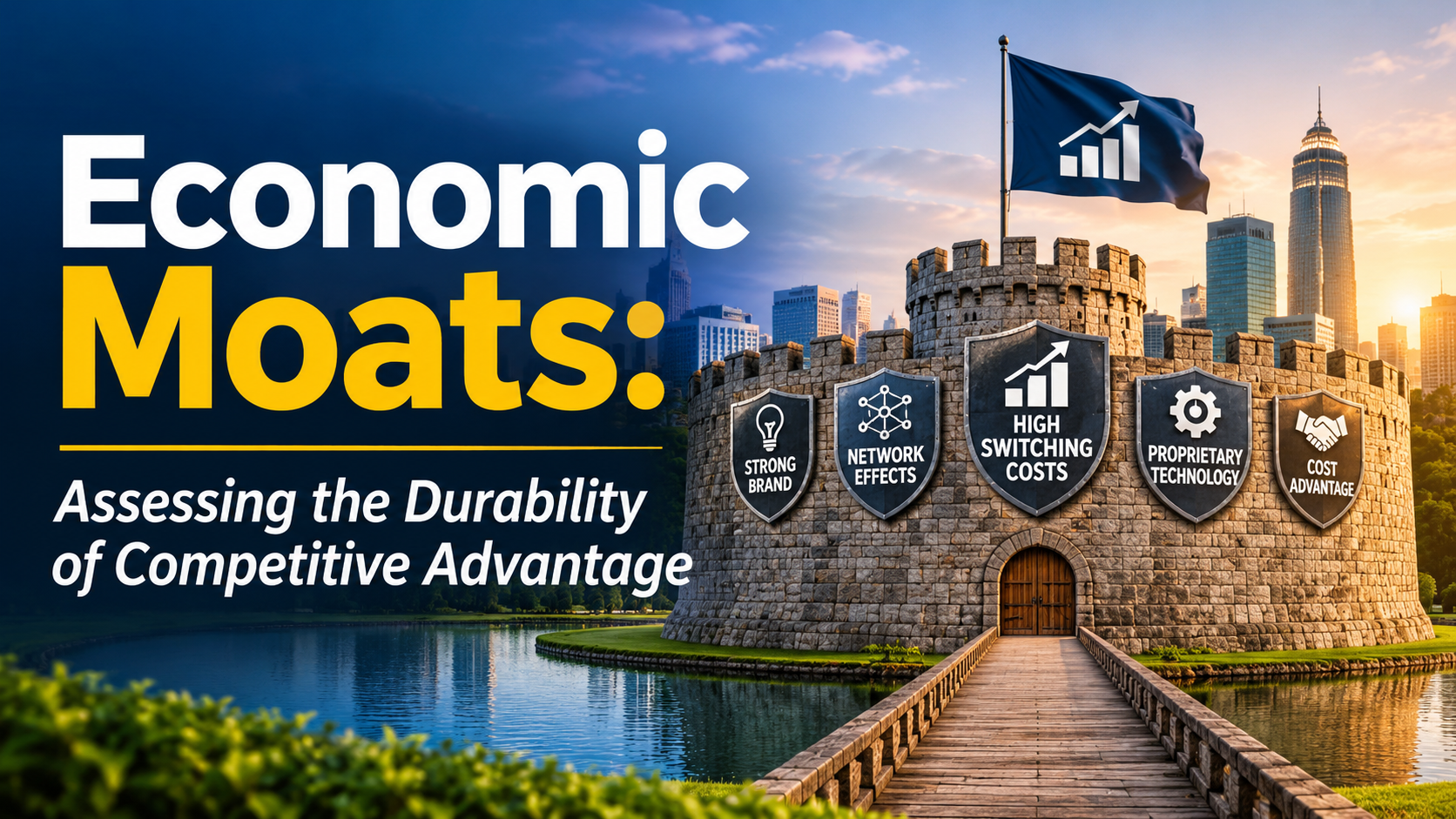
A company’s current profitability does not necessarily indicate that it can sustain strong financial performance over the long term. Competitors may enter its market, customers may switch to alternatives, and changes in technology or consumer preferences can weaken its position. For investment analysts, an important question is therefore not only whether a company is profitable today, but whether it has advantages that allow it to remain profitable in the future. These advantages are commonly described as economic moats.
An economic moat is a structural feature of a business that protects it from competitive pressure and helps it maintain attractive returns over time. A company with a strong moat may be able to defend its market share, preserve pricing power or generate returns on invested capital that exceed its cost of capital. A moat does not eliminate business risk, but it can make a company’s earnings and cash flows more resilient when competitors attempt to challenge its position.
One source of competitive advantage is a cost advantage. A business may produce or distribute goods at a lower cost than competitors because of scale, efficient operations, access to cheaper inputs or superior processes. This can allow it to offer lower prices while maintaining acceptable margins, or charge market-level prices and earn higher profitability.