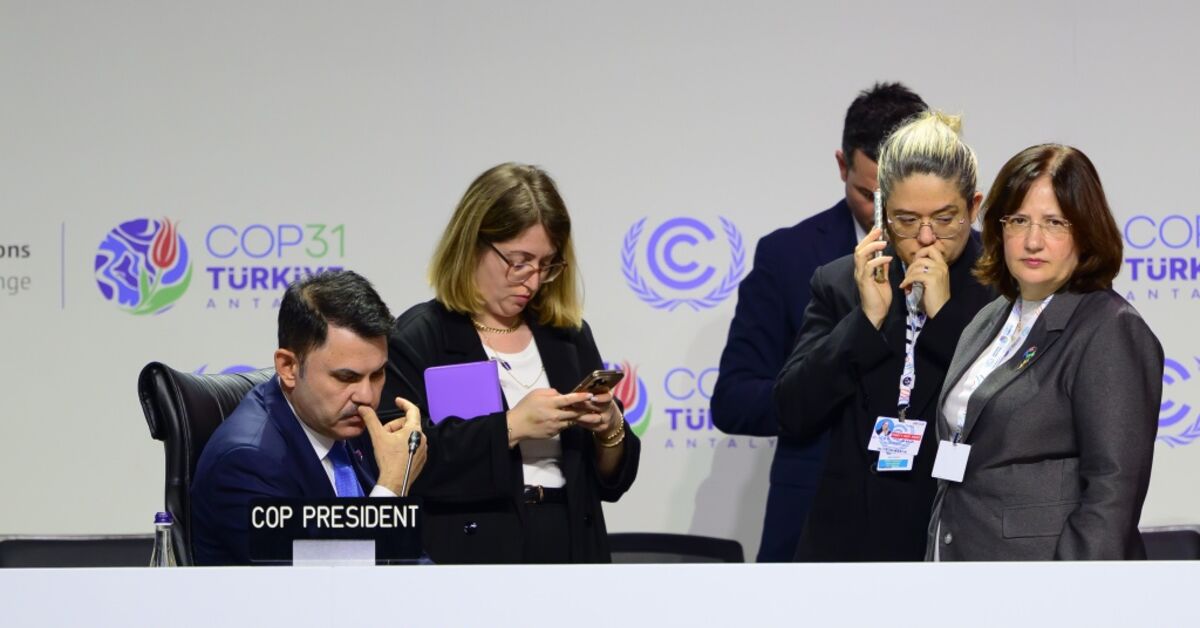
The collapse of marathon climate talks in Turkey has renewed questions about reform of their consensus requirement, and galvanised calls for legal action and ambitious side agreements between like-minded countries.
The "conference of the parties" talks, better known as COP31, ended without agreement and two days over schedule on Sunday, as countries deadlocked on fossil fuels, finance, science and carbon-removing technologies.
It was an ignominious end for an unusual dual-presidency shared by Australia and Turkey, and negotiations chair Chris Bowen, who is Australia's climate minister, said it was "very disappointing".
For many observers, the outcome was the inevitable result of a process that has regularly been hamstrung by its insistence on consensus.
"Decision-making that requires every country to agree on every comma is not fit for a climate emergency," said Nikki Reisch, director of the Center of International Environmental Law's climate and energy programme.
"The fundamental root of the problem is that when COP was created, for reasons I understand, it was made consensus only," he said. "That's a very tough ask."
Sunday's collapse has renewed calls for a reform to that consensus-based process, in which any one country, or a small minority, can nix progress.
"It has been clear for years that the COP process is in need of significant reform,"