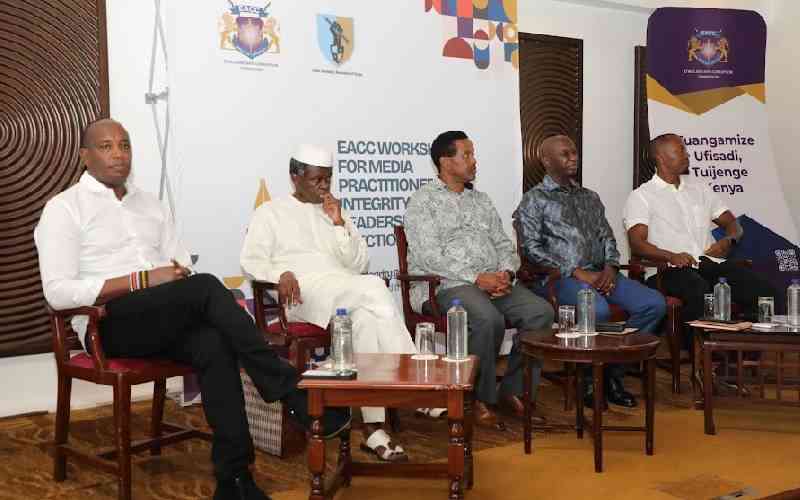
Realisation of the Integrity threshold for election to public office in Kenya remains constrained by gaps in the current integrity framework, thus hindering effective enforcement.
The Ethics and Anti-Corruption Commission says under the current framework, political candidates with active corruption cases in court and under investigation are cleared to contest elections.
The commission further blamed the uncertainty arising from the interpretation of Articles 99(3) and 193(3) of the Constitution, and the exhaustion of appeal and review processes as another hurdle hindering enforcement.
The Commission’s Regional Manager, Western Kenya, Eric Ngumbi said, for instance, EACC flagged 87 names with outstanding integrity issues in the 2017 General Election, and 241 individuals in 2022 out of whom only five were blocked by IEBC.
“Failure by political parties to consider candidates integrity and suitability during party primaries and nomination processes, prioritising candidates political influence and popularity over constitutional integrity standards, has also contributed to this uncertainty,” Ngumbi said.
While citing citizen apathy and tolerance of unethical conduct, Ngumbi said some public officers do not resign six months before elections as required under the Elections Act, with some resuming duty after unsuccessful party nominations.
Mr Ngumbi said there is an urgent need, therefore for all stakeholders to review legislation on integrity enforcement to address existing gaps and ambiguities.