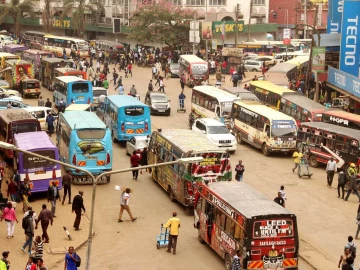
Matatus spend a large part of their earnings on fuel and vehicle maintenance.
By Joe Modie
Kenya has a thriving matatu culture, one that is increasingly becoming a tourist attraction in its own right.
For some visitors, experiencing Nairobi's vibrant matatu scene is becoming a must-do activity, with a ride inside one of the city's famously flamboyant, music-blasting, 'twerking' matatus finding its way onto their Kenyan travel bucket lists.
Matatu culture is wild and truly authentic to Kenya. Other East African countries are yet to replicate the matatu culture the Kenyan style.
For millions of Kenyans, the matatu is more than a means of transport. It is our unique urban identity.
Many consider it, and it is truly, the backbone of urban mobility, moving thousands of passengers to school, work and business daily.
All this is good. The question is whether our vibrant matatus can go electric fully – and still twerk and wear graffiti. Can our vibrant matatu culture go electric?
Electric vehicles (EVs) can be quite conservative – looking at the few that are already on our roads. The EVs don’t smoke – neither will you hear the loud music. It's that quiet, and quite the opposite of what you will find inside a proper mathree.