

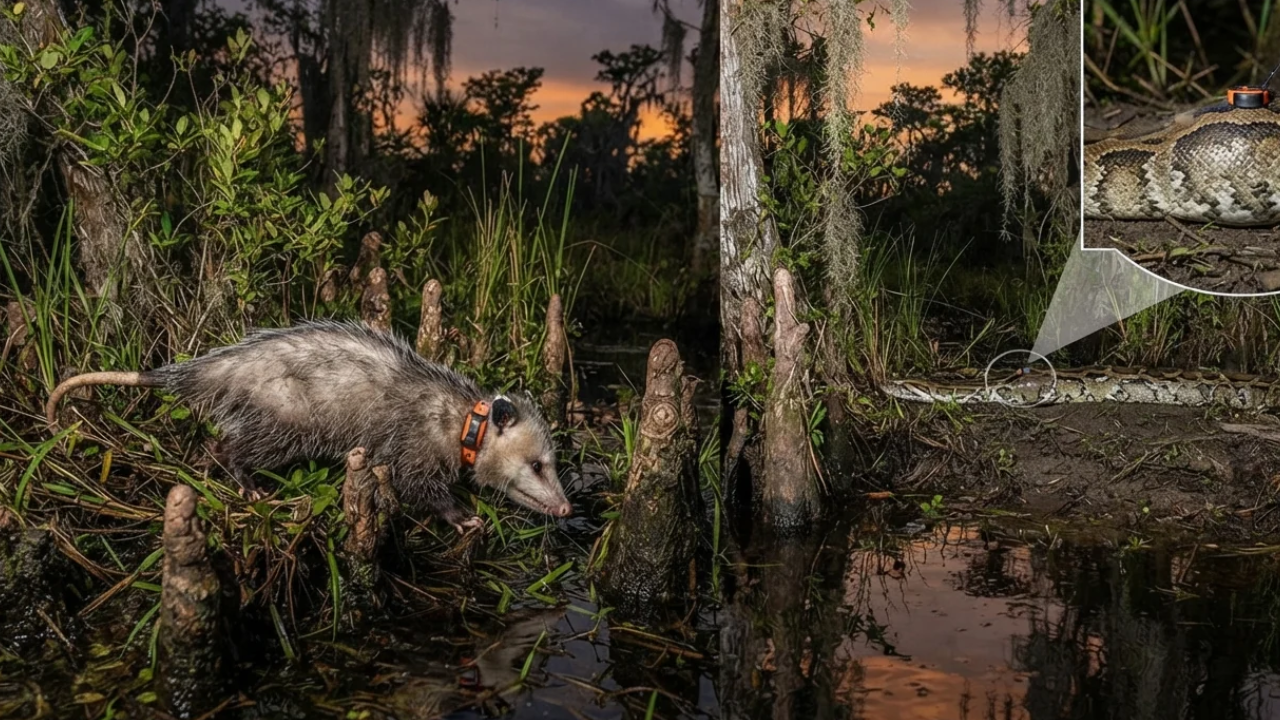
Opossums fitted with GPS collars are helping wildlife researchers in Florida track an animal that is notoriously difficult to find. The collars were originally meant to follow the movements of small mammals, but scientists noticed something unusual while examining the location data. Some devices stopped moving for hours before turning up at a different location. The explanation was unexpected. Burmese pythons had swallowed the opossums, carrying the still-functioning collars inside their bodies. Researchers are now using these signals to follow the invasive snakes through the Everglades, where their growing population has affected several native wildlife species.How GPS collars turned into an unexpected python-tracking toolIn 2022, scientists studying the movements of small mammals along Florida's southern coast placed tracking collars on opossums and raccoons. The devices were intended to record where the animals travelled and how they used their surroundings.The data began revealing an unusual pattern. Occasionally, a collar would remain in one place for hours before moving again. Rather than indicating that the animal had recovered from a period of inactivity, the change suggested that something had happened to it. Scientists realised that some of the collars were still transmitting after their original wearers had been eaten by Burmese pythons.Since these snakes swallow their prey whole, the tracking equipment can remain inside their digestive systems and continue sending location signals.…
Florida scientists use GPS-collared opossums to track hidden pythons
In brief
Opossums fitted with GPS collars are helping wildlife researchers in Florida track an animal that is notoriously difficult to find. The collars were originally meant to follow the movements of small mammals, but scientists noticed something unusual while examining the location data. Burmese pythons had swallowed the opossums, carrying the still-functioning collars inside their bodies.
This is the opening of the story, shared with credit to The Times of India — World. The rest of the report — with every detail — continues on the publisher’s website.
Continue reading at The Times of India — World ↗