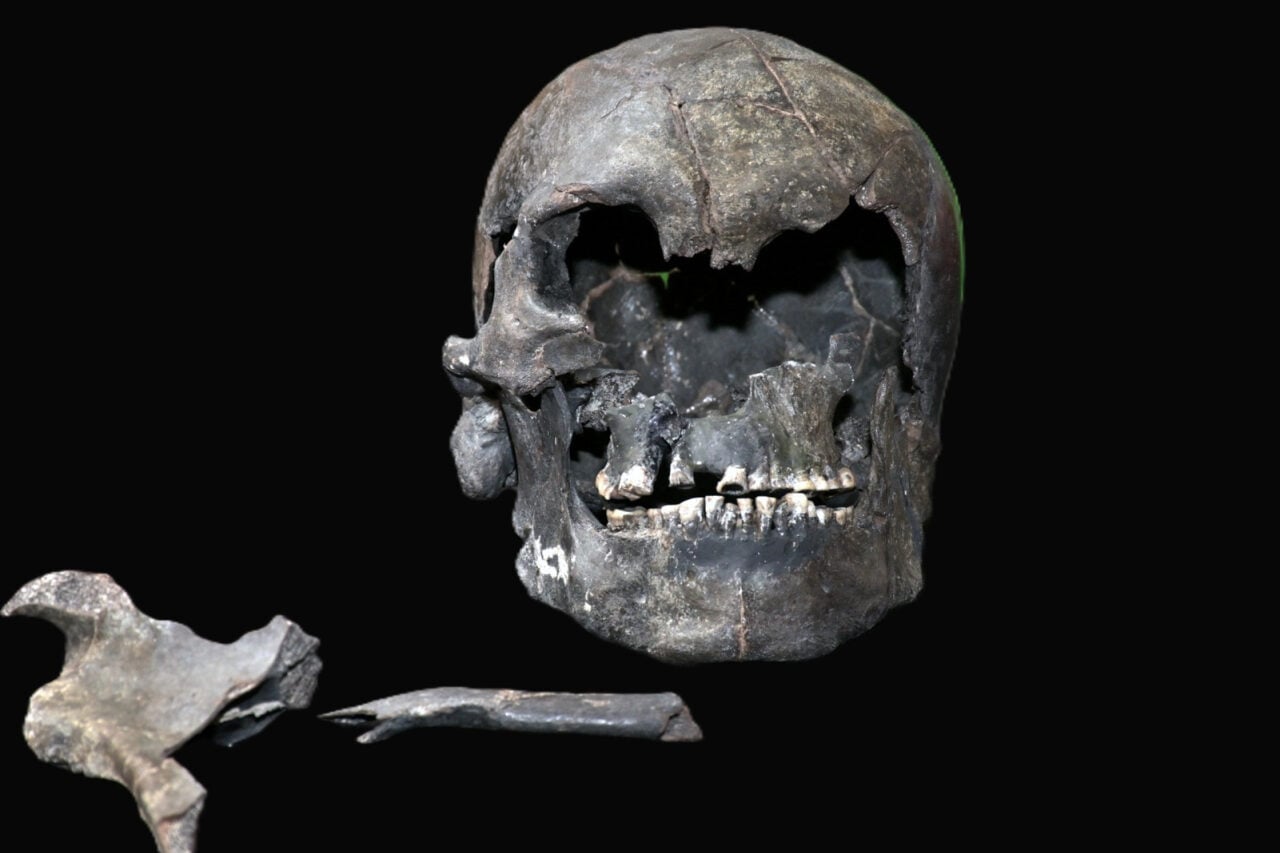
During construction work in 2021 for the Felipe Ángeles International Airport in Mexico, authorities found fragments of a blackened skeleton. Experts now have the specifics on the remains’ features—and its age may address one of archaeology’s greatest mysteries.
In a recent statement, Mexico’s National Institute of Anthropology and History (INAH) reported that two separate dating analyses placed the individual’s age between 13,087 and 11,700 years old, roughly around the late Pleistocene and the end of the last glacial period. According to a previous statement from 2024 on the discovery of “Yotzin” (which means “unique” in the Nahuatl language), the individual’s skeleton is roughly 80% complete with a partial skull. If the latest dating is correct, it would make Yotzin among the earliest inhabitants of the Americas, as well as one of the oldest human skeletons retrieved from the Valley of Mexico.
“Yotzin is one of the oldest known human remains from the Valley of Mexico,” Claudia Curiel de Icaza, Mexico’s secretary of culture, said in the latest statement (translated via Google). “Its dating brings us closer to a period in our history for which there is very little evidence and opens new possibilities for investigating how these populations lived and where they came from.”
The Felipe Ángeles International Airport formally opened for civilian use in 2022.