📰 Newspapers

German auto workers on back foot as costs, competition bite

German auto workers on back foot as costs, competition bite

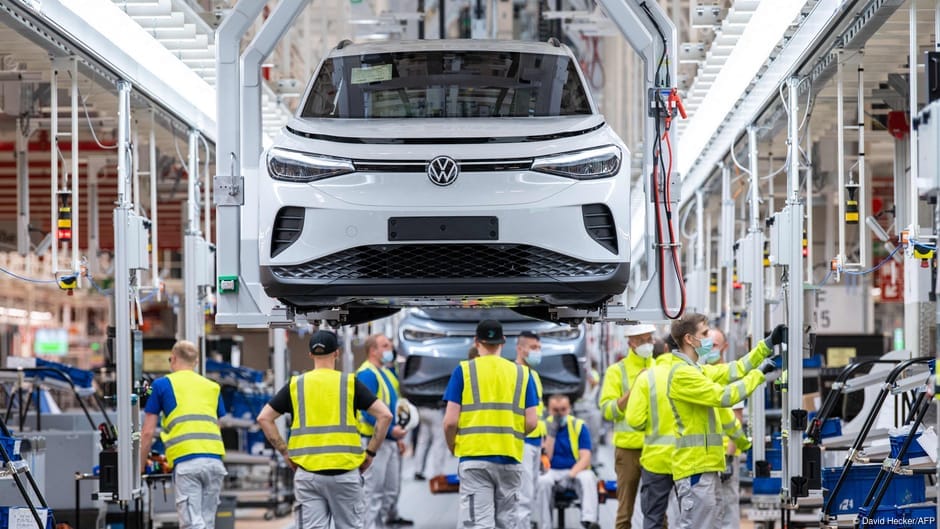
German auto workers profited during the industry's boom years, but are now increasingly being asked to trade past gains for future job security.

For decades, German auto bosses and labor representatives touted their ability to work through their disagreements in a uniquely cooperative process. Those days appear to be gone.

A series of crises across the industry and abrupt moves by management to slash costs are testing the limits of the German power-sharing agreement.

As negotiations between union representatives and Germany's largest carmaker, Volkswagen, began on Tuesday, the balance of power appeared increasingly one-sided.

Volkswagen wants to freeze wages for the next two years while cutting several allowances and bonuses.

Alongside Mercedes, it's demanding longer hours under the same pay, with both companies threatening to withhold investment from German factories.

Unions have responded with warning strikes and the threat of larger walkouts. Yet workers are aware of the grim outlook, with Germany's auto industry losing more than 123,000 jobs between 2019 and 2025, according to the Ifo Institute.

"I think that the labor representatives are in a very difficult situation," said Thomas Haipeter, a labor researcher at the University of Duisburg-Essen. "On the one hand, they have to make concessions in order to safeguard jobs. And despite these massive employment reductions to safeguard the rest of the jobs and locations, what is missing for them is a kind of more offensive strategy."

In brief

For decades, German auto bosses and labor representatives touted their ability to work through their disagreements in a uniquely cooperative process. A series of crises across the industry and abrupt moves by management to slash costs are testing the limits of the German power-sharing agreement. As negotiations between union representatives and Germany's largest carmaker, Volkswagen, began on Tuesday, the balance of power appeared increasingly one-sided.

This is the opening of the story, shared with credit to DW — Top stories. The rest of the report — with every detail — continues on the publisher’s website.

Continue reading at DW — Top stories ↗

Cookie settings

Choose which cookies we may use. You can change this at any time from Cookie settings in the footer. Details of each cookie are in the Cookie Policy.

Strictly necessary

Needed for sign-in, security, payments and remembering these choices. Always on.

Preferences

Remember settings such as dark mode.

Analytics & performance

Help us count visits, understand which pages, devices and countries our readers use, and measure how well the site performs – anonymous and aggregated.

Advertising & marketing

Lets advertising partners show and personalise adverts, measure impressions, clicks and visits, prevent ad fraud and pay us – this is how the free site is funded.

🔔 News notifications

Get headlines from NewsHub on this device — even when the site is closed.

You can switch this off at any time. Works on Android, Windows, Mac and Linux browsers; on iPhone/iPad add the site to your Home Screen first.