

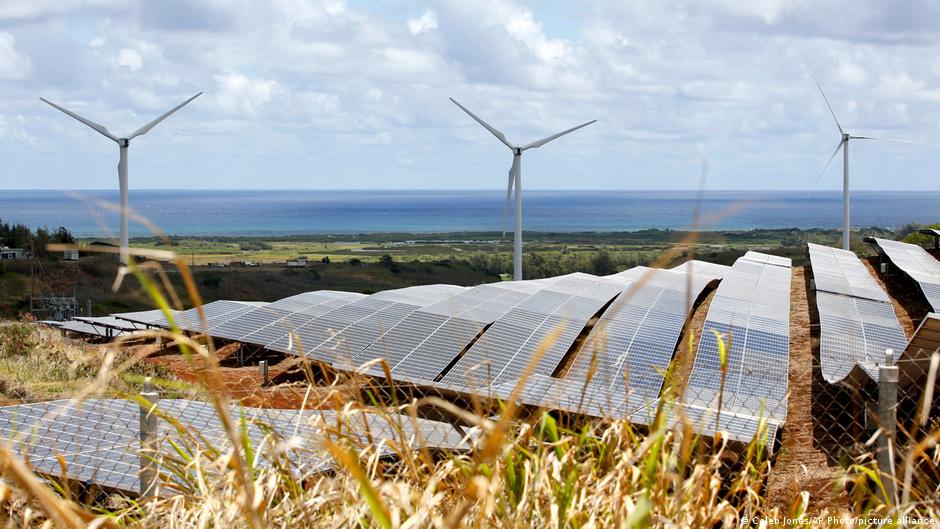
While the dust has barely settled on the Democrats' big midterm showing, lawmakers still have business to get done before a new US Congress takes office in 2027: namely, a permitting reform bill with rare cross-party support that could accelerate clean energy or fossil fuels — or both, depending on who's asked.
Permitting reform might sound like a snooze. But the Bipartisan American Affordability and Jobs Act (BAAJA) could have far-reaching consequences for the country's energy mix, household utility bills and climate goals.
BAAJA, which is backed by US President Donald Trump, has already cleared the Senate and now faces a vote in the House of Representatives. DW breaks down what's in the bill, the political fight playing out on the sidelines and what it could mean for consumers' pockets and the US energy transition.
Before many new solar farms, wind projects or power plants can connect to the electricity grid, they must first pass through an arduous and complex permitting process.
Getting the greenlight for an energy project can often take years and requires permits from multiple government agencies. If it manages to overcome those hurdles, a legal challenge can easily stop new infrastructure in its tracks.
The nearly 500-page bill aims to overhaul that process.