BEIRUT: Lebanon marked World Olive Tree Day on Thursday as Israeli attacks and restrictions on access to farmland disrupted a fourth harvest season for growers in the south. A national assessment warned that more than a million people across the country were facing acute food insecurity.
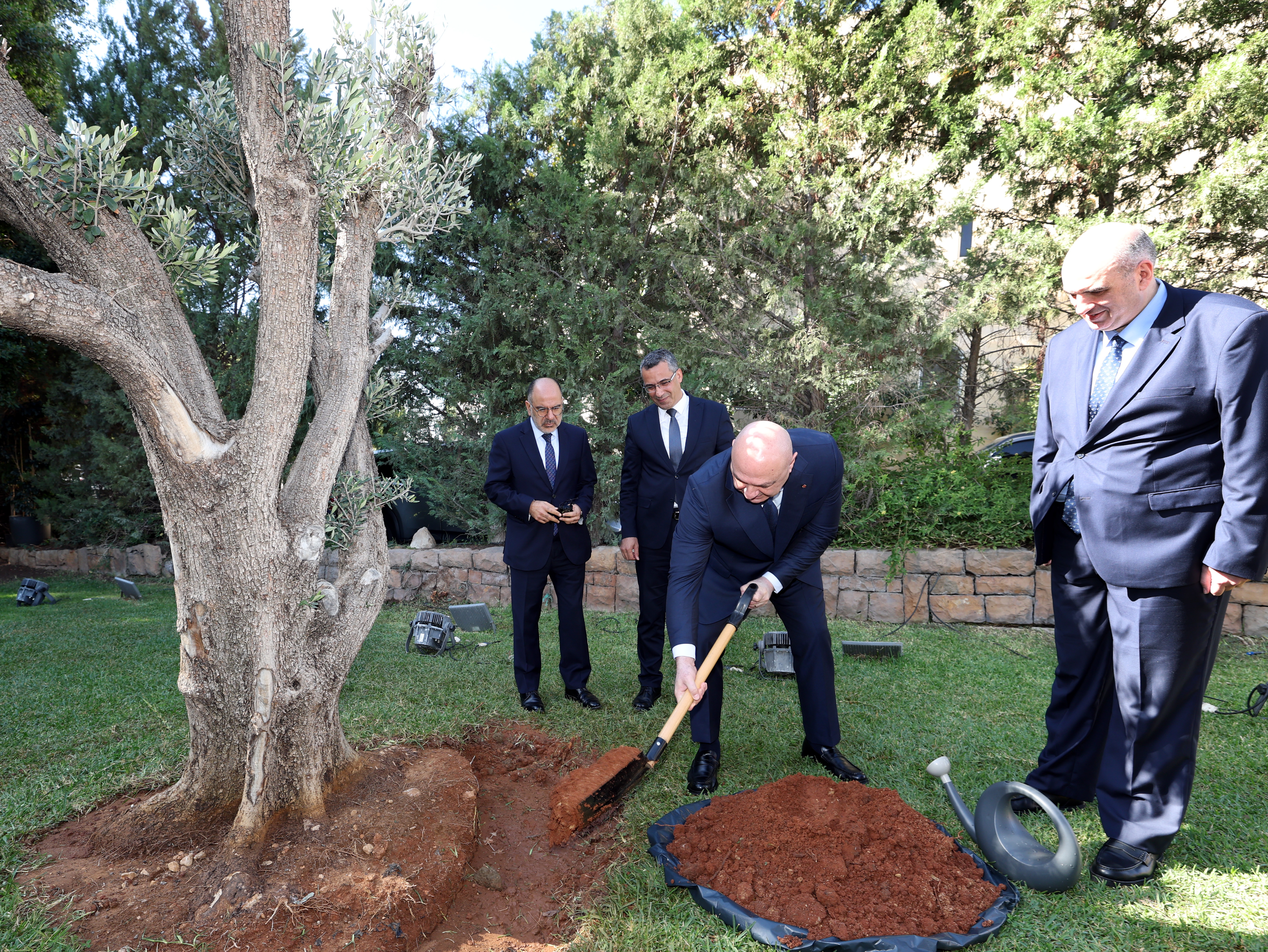
Lebanon’s Agriculture Minister Nizar Hani planted an olive tree in the garden of the presidential palace to mark the occasion, which UNESCO established in 2019.
“The olive tree is a cornerstone of our national identity and a source of income for families, farmers and artisans from northern Lebanon and the Bekaa Valley to the south and the mountains,” Lebanon’s President Joseph Aoun said. “It is a symbol of peace and hope.”
Parliament Speaker Nabih Berri planted an olive tree at his official residence in Ain Al-Tineh. He accused Israeli forces of uprooting thousands of centuries-old olive trees in occupied border areas, calling it a violation of international humanitarian law that amounted to “a war crime.”
The UN Food and Agriculture Organization estimated that 814 hectares of olive groves burned in the South and Nabatieh governorates between October 2023 and November 2024. It put olive production losses linked to that period at about $236 million.
A separate Lebanese Agriculture Ministry assessment covering both rounds of fighting put production losses at about $307 million, equivalent to…