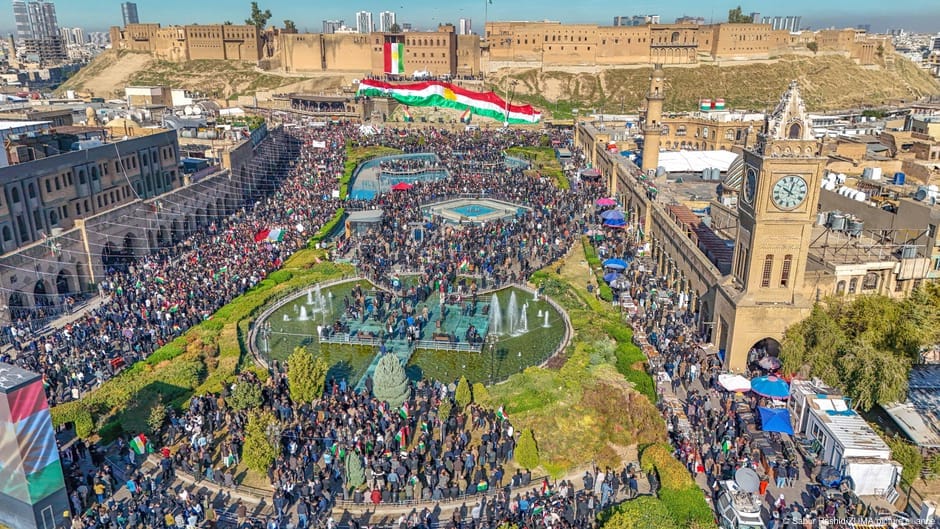
Protesters took to the streets of Irbil, also often written Erbil, in Iraqi Kurdistan early on Thursday in large numbers, waving massive flags of the semiautonomous region in northern Iraq.
They were responding to federal government plans announced earlier in the week for Baghdad to take control of oil operations and border crossings previously run by Kurdish authorities.
Iraqi Prime Minister Ali al-Zaidi had said the measures were part of a bid to stop oil smuggling when announcing the changes.
The plans marked an escalation in the long-running power struggle between the central government and Kurdish authorities that have largely governed themselves since 1991, albeit with varying levels of recognition and authority.
Rival Kurdish parties joined forces for the large protests in the regional capital.
Protests were also reported to have spread to several other towns and cities beyond the capital.
Iraq's 2005 constitution, written following the US-led invasion that toppled Saddam Hussein, formally recognized the Kurdish region and its government. But authorities in Erbil and Baghdad have remained in a tug of war over the control of land, oil and money ever since.
Tuesday's decision, which received backing from Iraq's Federal Supreme Court a day later, brings border crossing in the Kurdish region under federal government management.