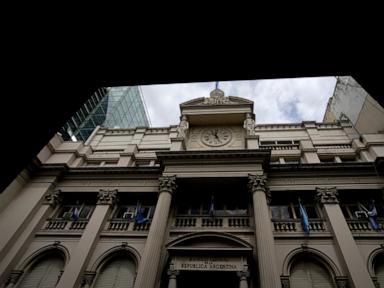
Argentina’s Congress has approved a law that bans the central bank from printing money to cover government spending
BUENOS AIRES, Argentina -- Argentina’s Congress voted Thursday to bar the central bank from printing money to pay the government’s bills, enshrining in law a key pillar of President Javier Milei’s fight against the country’s notoriously high inflation.
Under the new charter, the central bank’s “primary and fundamental mission” will be to preserve the value of the peso — a goal Milei has pursued in office even though, as a candidate in 2023, he promised to abolish the bank and replace the local currency with the U.S. dollar.
The 141-0 vote in the Chamber of Deputies, with 99 abstentions, comes days after preliminary figures showed Argentina had likely slipped into recession, less than a year before the libertarian economist seeks a second four-year term.
For generations, when Argentine governments spent more than they collected in taxes, they turned to the central bank to print pesos to fill the gap, fueling repeated currency crises and bouts of hyperinflation. The law puts an end to “91 years of plunder, expropriation, impunity and institutional decay,” Milei’s office said in a statement.
The new charter bars the bank from lending to any level of government or otherwise financing the Treasury.