

Germany's largest trade union, IG Metall, and employers in the metal and electrical industries agreed a pay deal on Thursday after 26 hours of talks. The deal initially covers two German regions. If adopted nationwide, it could extend to 3.7 million workers in industries including carmaking, electrical equipment and electronics, aerospace, defence and mechanical engineering.Employees covered by the agreement will receive a 2% pay rise from 1 May 2027, followed by a further rise of 2.3% from 1 April 2028.They will also receive a one-off payment of €150, €300 or €450 in March 2027, depending on their employer's net return on sales, IG Metall said in a statement.The agreement will run for 25 months, until 30 November 2028, Gesamtmetall, the umbrella organisation for the sector's employers' associations, said in a separate statement.Trade unions and employers have also agreed on a mechanism which, according to Gesamtmetall, permits the "use of collective bargaining measures to reduce costs in return for commitments regarding investment, products or technologies which offer long-term employment prospects" in Germany.The deal followed two waves of warning strikes involving more than 956,000 workers, according to IG Metall. Walkouts earlier this week hit plants operated by Mercedes-Benz and BMW.IG Metall had sought a 5% pay rise over one year.
Germany's IG Metall reaches pay deal amid industrial crisis
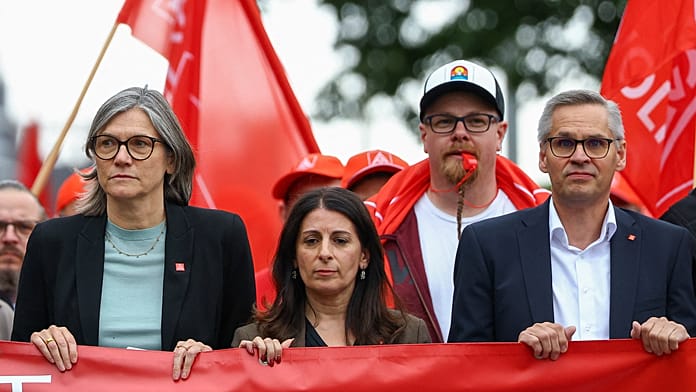
A pay deal that could cover 3.7 million workers across Germany raises wages in two stages and lets struggling manufacturers seek labour cost savings in return for binding pledges to invest and protect jobs in Germany.
In brief
Germany's largest trade union, IG Metall, and employers in the metal and electrical industries agreed a pay deal on Thursday after 26 hours of talks. The deal initially covers two German regions. Walkouts earlier this week hit plants operated by Mercedes-Benz and BMW.IG Metall had sought a 5% pay rise over one year.
This is the opening of the story, shared with credit to Euronews. The rest of the report — with every detail — continues on the publisher’s website.
Continue reading at Euronews ↗