An international team of experts has identified four factors it believes led to the 2010 Smolensk plane crash, which killed 96 people, including Polish President Lech Kaczyński and his wife.The experts identified an unstable approach to landing, an incorrect assessment of the aircraft's actual altitude, a continued descent below the minimum altitude and a delayed decision to abort the landing. They also ruled out an explosion as the cause of the crash.Poland's National Prosecutor's Office spokesperson Przemysław Nowak presented the findings of the comprehensive report on Friday, stressing that they reflected the experts' conclusions rather than an independent assessment by prosecutors.A total of 22 experts from the United States, the United Kingdom, Ireland and Hungary contributed to the report."These are the findings and assessments of the experts. So they are not the findings and assessments of the prosecution or the prosecutors," Nowak said.Five years of work and 66 questions from prosecutorsThe international team of experts was tasked with preparing a comprehensive report on the circumstances, sequence of events and causes of the crash. The experts drew on all the evidence gathered and on earlier expert assessments.The disciplines covered in the analysis included aviation, medicine, chemistry, engineering, computational mathematics and photogrammetry.The first report was issued in August 2024. The document, drafted in English, ran to several hundred pages including annexes.
Smolensk crash: Experts identify landing errors, rule out explosion
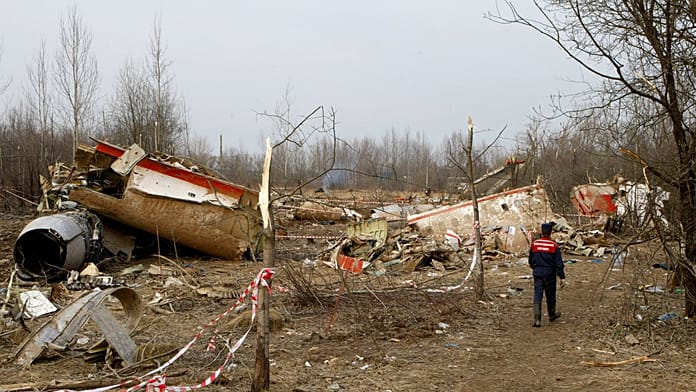
More than 16 years after the Smolensk disaster, prosecutors have released the findings of international experts who ruled out an explosion as the cause of the crash. Former Polish Defence Minister Antoni Macierewicz has rejected their conclusions.
In brief
An international team of experts has identified four factors it believes led to the 2010 Smolensk plane crash, which killed 96 people, including Polish President Lech Kaczyński and his wife.The experts identified an unstable approach to landing, an incorrect assessment of the aircraft's actual altitude, a continued descent below the minimum altitude and a delayed decision to abort the landing.
This is the opening of the story, shared with credit to Euronews. The rest of the report — with every detail — continues on the publisher’s website.
Continue reading at Euronews ↗