

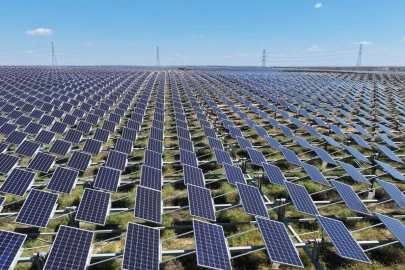
There is a compelling case for looking beyond national borders when assessing climate progress.
BY Onyango K’Onyango
Climate diplomacy is often measured by promises made at international conferences. Yet the most consequential changes are taking place beyond negotiating halls: in power stations, factories, transport systems and homes.
As temperatures rise and extreme weather pressures economies, the world needs solutions that deliver cleaner energy at scale.
That progress depends on expanding renewable electricity, improving energy storage and making cleaner technologies affordable.
Countries still struggling to provide reliable electricity must power industries, hospitals, schools and homes without locking themselves into costly, carbon-intensive systems.
There is a compelling case for looking beyond national borders when assessing climate progress. A solar panel manufactured in one country can displace fossil-fuel generation in another; a battery developed in one market can help stabilise an electricity grid thousands of kilometres away.
China is central to this transformation. In 2025, it installed 378 gigawatts of solar capacity, representing 58 per cent of global additions.
Its 119 gigawatts of new wind capacity accounted for 72 per cent of the worldwide total, according to Ember. Ember is an energy think tank that aims to accelerate the clean energy transition with data and policy.
These figures reflect an industrial effort on a scale, expanding renewable electricity and helping bring down the…