

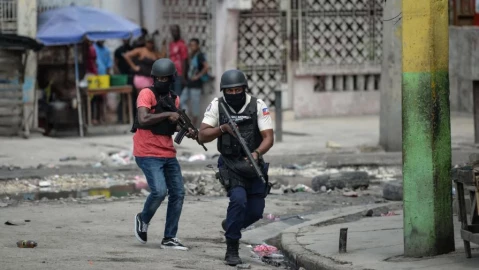
Before October, El Salvador had some 120 non-combatants in Haiti as part of a UN-backed security force.
Haitians have welcomed El Salvador President Bukele's rapid military intervention, heartened that someone is finally tackling the entrenched gang warfare that has claimed over 20,000 lives in the small Caribbean nation in four years.
But a month into Bukele's surge of some 2,000 soldiers, security experts say the Salvadoran force has not achieved concrete territorial gains and that Bukele's efforts to crush Haiti's powerful gangs – in the way he did in his home country – could run into roadblocks and put civilians at risk.
"There's a theatrical component and that's part of the shock and awe," said Robert Muggah, a Haiti advisor to the UN. "But it's not yet resulting in the securing and holding of territory."
Before October, El Salvador had some 120 non-combatants in Haiti as part of a UN-backed security force. But after four of the Salvadoran contingent went missing on October 18, Bukele rushed in more than 2,000 soldiers under a separate mission operating outside the UN mandate.
Bukele said this mission aims to recover his missing countrymen, but he's since launched airstrikes far from where the four Salvadorans disappeared. Both Haiti and El Salvador have been silent on the terms of their bilateral security agreement.