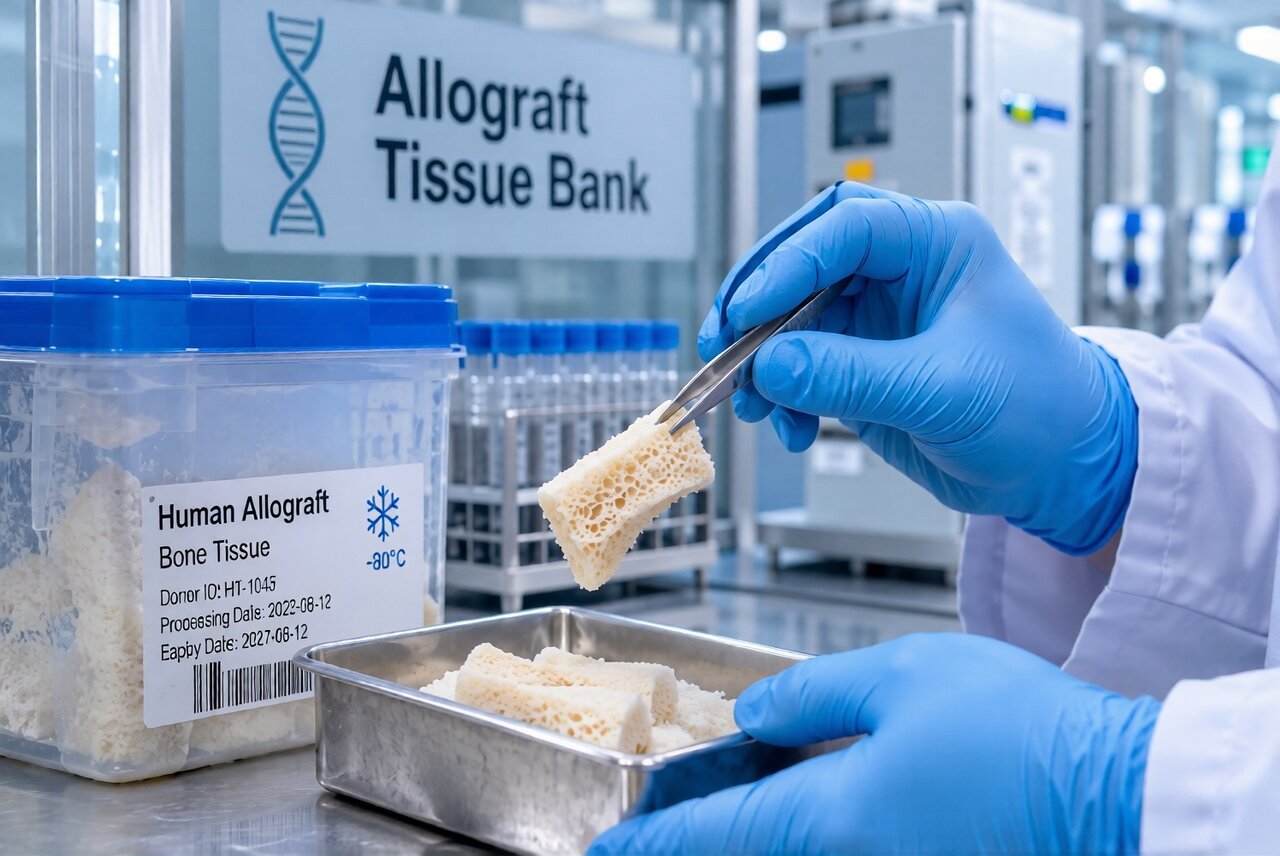
TEHRAN – Iran is among 10 countries worldwide possessing the technology to produce allograft tissue products, which are widely used in a range of surgical procedures, including neurosurgery, orthopedics, urology, gynecology, maxillofacial surgery, plastic surgery and wound reconstruction.
Domestically manufactured allografts have also significantly reduced the cost of certain medical procedures, replacing products that were previously imported at prices of around 20,000 euros with locally produced alternatives costing approximately 90 million rials (about 42 euros), according to a report by ISNA.
Masoumeh Majidi, a faculty member at Tehran University of Medical Sciences, explained that allograft products are derived from donated human tissues, primarily obtained from brain-dead donors who have consented to tissue donation or whose families have authorized the donation.
Following the procurement of organs such as the kidneys, heart and lungs for transplantation, other tissues, including skin, bone, tendons and muscles, can also be recovered, processed and prepared for use in various surgical procedures.
These tissues serve a wide range of medical applications, providing surgeons with biological materials for reconstructive procedures and the repair or replacement of damaged tissues.
Majidi said bone-based graft products are manufactured in different sizes and forms and supplied to neurosurgeons, orthopedic surgeons and maxillofacial specialists, allowing them to select suitable materials according to patients' needs and the requirements of individual procedures.