

Military use and mass surveillance are also potential flashpoints for the world's two leading AI powers.
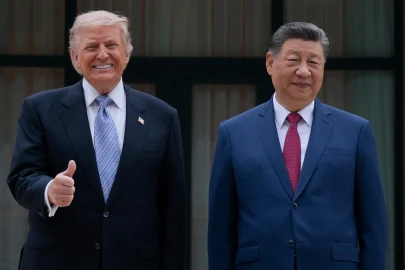
After agreeing in September to set up an AI crisis hotline, US President Donald Trump and his Chinese counterpart Xi Jinping will attempt this week to bring the idea closer to fruition.
Threatening to steal their thunder is Jensen Huang's resignation as boss of US chip titan Nvidia after revelations of an affair with a suspected Chinese spy.
But with artificial intelligence developing at a rapid pace, many see cooperation on how to tackle its risks and benefits as increasingly urgent.
Here's what to expect ahead of AI safety talks between Trump and Xi at the Asia-Pacific Economic Cooperation (APEC) meeting on November 18-19:
What's at stake?
Despite the countries' fierce tech rivalry, AI safety risks of shared concern range from infrastructure hacking to people using the technology to help build bioweapons.
Another problem is out-of-control AI agents, tools that complete real-life tasks online, which came to the forefront after US lab OpenAI acknowledged its autonomous bots had hacked into websites, including an Australian government data portal.
Military use and mass surveillance are also potential flashpoints for the world's two leading AI powers.
Researcher Christopher LaRoche wrote in the Bulletin of the Atomic Scientists on Sunday that an AI hotline could be "a step…