📰 Newspapers

Body found in Derry bog decapitated more than 2,000 years ago, coroner finds

Body found in Derry bog decapitated more than 2,000 years ago, coroner finds

Inquest-style inquiry concludes iron age remains are of 15- to 22-year-old female who may have been ritually sacrificed

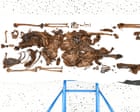
A coroner’s investigation into Northern Ireland’s most venerable cold case has concluded that the victim was decapitated more than 2,000 years ago.

The inquest-style inquiry determined that Ballymacombs More Woman – the name given to iron age remains found in a County Derry bog three years ago – was between 15 and 22 years old when she was beheaded from behind with a bladed weapon.

The inquiry, hosted at the Ulster Museum on Monday, was not a formal inquest but adopted the structure and methodology of a coroner’s investigation and drew on the latest archaeological, forensic and scientific evidence to examine the death.

“The purpose of the exercise is not to impose modern legal conclusions upon the distant past, but to provide a framework through which the available evidence could be assessed and the story of a previously unknown young woman could be told,” said the coroner for Northern Ireland, Joe McCrisken, who chaired the investigation.

“Although separated from us by more than 20 centuries, she was once a living member of her community, and the investigation sought to restore, insofar as possible, an understanding of her life, death and place in history.”

In brief

Inquest-style inquiry concludes iron age remains are of 15- to 22-year-old female who may have been ritually sacrificed A coroner’s investigation into Northern Ireland’s most venerable cold case has concluded that the victim was decapitated more than 2,000 years ago. The inquest-style inquiry determined that Ballymacombs More Woman – the name given to iron age remains found in a County Derry bog three years ago – was between 15 and 22 years old when she was beheaded from behind with a bladed weapon.

This is the opening of the story, shared with credit to The Guardian — World. The rest of the report — with every detail — continues on the publisher’s website.

Continue reading at The Guardian — World ↗

Cookie settings

Choose which cookies we may use. You can change this at any time from Cookie settings in the footer. Details of each cookie are in the Cookie Policy.

Strictly necessary

Needed for sign-in, security, payments and remembering these choices. Always on.

Preferences

Remember settings such as dark mode.

Analytics & performance

Help us count visits, understand which pages, devices and countries our readers use, and measure how well the site performs – anonymous and aggregated.

Advertising & marketing

Lets advertising partners show and personalise adverts, measure impressions, clicks and visits, prevent ad fraud and pay us – this is how the free site is funded.

🔔 News notifications

Get headlines from NewsHub on this device — even when the site is closed.

You can switch this off at any time. Works on Android, Windows, Mac and Linux browsers; on iPhone/iPad add the site to your Home Screen first.