📰 Newspapers

Inside LG’s Smart Factory Where AI and Robots Are Replacing Human Labour

Inside LG’s Smart Factory Where AI and Robots Are Replacing Human Labour

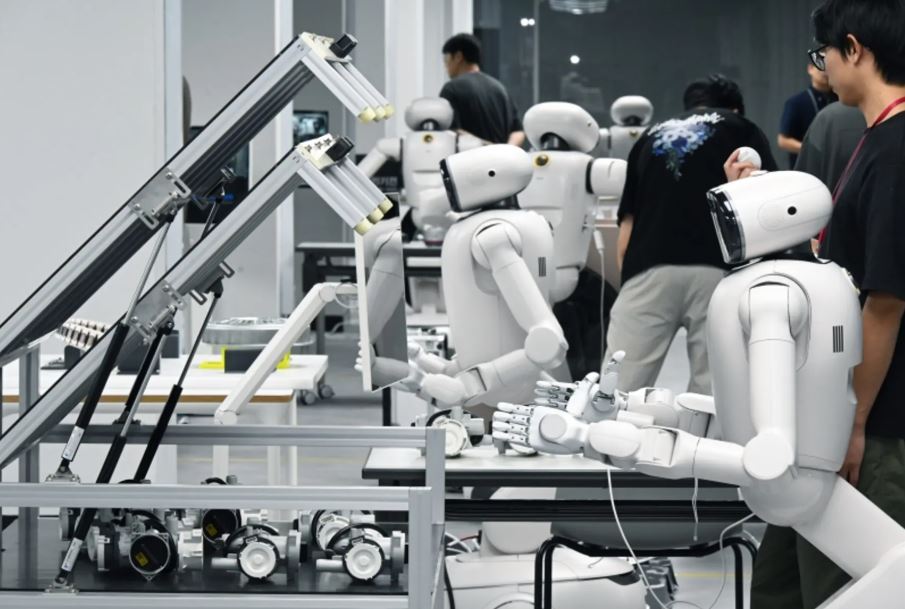
Factories are increasingly relying on machines that can detect faults, move materials and make production decisions with limited human intervention. In South Korea, LG Electronics is using artificial intelligence and robotics to transform how it manufactures household appliances while developing technology that lets different home devices operate as one connected system.

The company’s manufacturing operations at LG Smart Park in Changwon show how automation is changing traditional factory work. The facility uses interconnected machines, digital monitoring systems and autonomous robots to manage production, identify potential problems and improve the movement of materials.

LG Smart Park received recognition from the World Economic Forum in 2022 after being named a Lighthouse Factory. The recognition is given to manufacturing facilities that demonstrate the use of advanced technologies to improve productivity and industrial operations.

One of the technologies used at the factory is a digital twin system. It creates a virtual model of the production environment, allowing engineers to monitor operations and examine what could happen if certain processes are disrupted.

The system analyses manufacturing information every 30 seconds and can simulate possible problems within a 10-minute window. When it identifies a potential disruption, it alerts workers, allowing them to intervene before production is affected.

This approach allows the company to identify operational weaknesses before they develop into expensive manufacturing problems.


In brief

Factories are increasingly relying on machines that can detect faults, move materials and make production decisions with limited human intervention. The company’s manufacturing operations at LG Smart Park in Changwon show how automation is changing traditional factory work. The facility uses interconnected machines, digital monitoring systems and autonomous robots to manage production, identify potential problems and improve the movement of materials.

This is the opening of the story, shared with credit to Business Today Kenya. The rest of the report — with every detail — continues on the publisher’s website.

Continue reading at Business Today Kenya ↗

Cookie settings

Choose which cookies we may use. You can change this at any time from Cookie settings in the footer. Details of each cookie are in the Cookie Policy.

Strictly necessary

Needed for sign-in, security, payments and remembering these choices. Always on.

Preferences

Remember settings such as dark mode.

Analytics & performance

Help us count visits, understand which pages, devices and countries our readers use, and measure how well the site performs – anonymous and aggregated.

Advertising & marketing

Lets advertising partners show and personalise adverts, measure impressions, clicks and visits, prevent ad fraud and pay us – this is how the free site is funded.

🔔 News notifications

Get headlines from NewsHub on this device — even when the site is closed.

You can switch this off at any time. Works on Android, Windows, Mac and Linux browsers; on iPhone/iPad add the site to your Home Screen first.